


The Health Drink Deception: Complan, Horlicks, and Bournvita – Are You Feeding Kids Growth or Just Sugar?

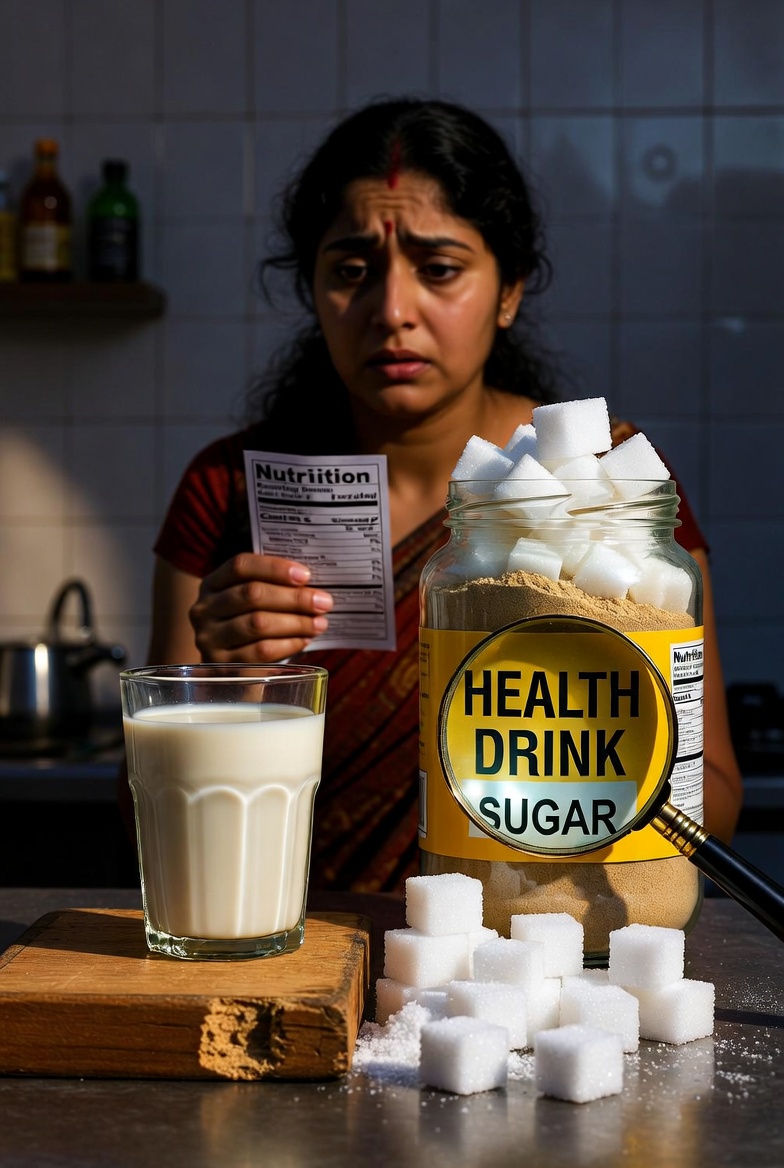
Do you remember the 90s? The golden era when the "current went out" right in the middle of a cricket match, and the only stress we had was whether Shaktimaan would survive the villain? In those days, there was a sacred ritual in every Indian household, from South Delhi to South Chennai. The "Doodh ka Glass" (Glass of Milk).
But plain milk? Chee. No, no. It had to be brown (chocolate) or beige (malt).
We grew up believing the marketing jingles. "I am a Complan Boy," "Taller, Stronger, Sharper," and "Boost is the secret of my energy." If you didn't drink it, you were told you’d remain short, fail your Math exam, and basically shame the family name.
Fast forward to today. We are the parents now. We are still buying these jars, costing ₹500 a pop, thinking we are building immunity for our Chintu and Pinky.
But wait, yaar. Have you actually turned that jar around and read the label? Or are you just trusting the TV ad where a mother in a crisp sari looks very concerned about vitamins?
Today, we are doing a deep dive. We are stripping away the marketing masala to look at the ingredients. Are these "Health Drinks" actually making our kids healthy, or are they just expensive sugar factories?
Spoiler alert: You might want to sit down for this one.
The "Sugar" Coat: What’s Actually Inside?
Let’s play a game. It’s called "Spot the Helper." In nutritional science (and common sense), the ingredient listed first on the packet is the one that is present in the highest quantity.
Go to your kitchen cabinet. Pick up that jar of Bournvita, Horlicks, or Complan. Look at the back.
In many popular Indian health drinks, the first or second ingredient is Sugar (or Malt Extract, or Liquid Glucose—which are just fancy names for sugar’s cousins).
Here is the solid truth:
Most commercial health drinks contain 30% to 50% sugar.
That means for every two spoons of powder you mix into your child’s milk, one spoon is pure sugar.
Imagine if I told you, "Hey, to make your child taller, feed them a Cadbury 5-Star dissolved in milk every morning." You would call me crazy, right? You would chase me out with a chappal. Yet, chemically speaking, that is not very different from what is happening in these mugs.
But Rajesh, What About the Vitamins?
"But Uncle," I hear you say, "The label says it has Vitamin D, Iron, and Calcium!"
Yes, it does. But here is the catch. The amount of "good stuff" is often tiny compared to the "bad stuff" (sugar and refined flour/maida).
Companies sprinkle a pinch of synthetic vitamins into a bucket of sugar and flour so they can legally slap the word "Health" on the label. It’s like putting a single Tulsi leaf on a double-cheese pizza and calling it an "Ayurvedic Salad." It doesn’t work that way, boss.
Paisa-Vasool Metric: Are You Getting Your Money’s Worth?
We Indians love value for money. We will squeeze the toothpaste tube until it begs for mercy. So, let’s look at the economics of these health drinks.
Average Cost: ₹400 - ₹600 per kg.
Primary Ingredients: Sugar, Wheat Flour (Maida), Malt Extract, Milk Solids.
You are essentially paying premium prices for cheap carbohydrates.
The "Real Food" Comparison:For the price of one 500g jar of a branded health drink (approx ₹250-₹300), you could buy:
3 Dozen Eggs (Solid protein source)
OR 250g of Almonds (Badam)
OR 3 Kilos of seasonal fruits.
The Verdict: This is NOT Paisa-Vasool. It is a marketing tax we pay for our anxiety about our children's growth.
Fact-Check: Sorting the Chai-Tapri Myths
Let’s filter out the "WhatsApp University" rumors regarding these drinks.
Myth 1: "If my child drinks this, they will increase in height."
Fact: Height is 80% genetics and 20% overall nutrition/sleep. No magical brown powder can rewrite your child’s DNA. If the parents are short, drinking 5 liters of "Height-Booster" isn’t going to turn the kid into LeBron James.
Myth 2: "My child hates the taste of plain milk, so this is necessary."
Fact: This is the only valid argument, but it’s a trap. By adding sugary powders, you are conditioning your child’s palate to crave only high-sugar foods. You are training them to hate natural flavors. It’s a cycle.
Myth 3: "These drinks boost brain power and exam marks."
Fact: The only thing that boosts exam marks is studying (and maybe turning off the iPad). Sugar spikes actually cause a "crash" later, making it harder for kids to concentrate in school.
The Regional Flavor: From Boost to Badam
India is diverse, and so are our milk habits.
In the South: We love our Boost. Even Sachin Tendulkar said, "Boost is the secret of my energy." (Though I suspect his secret was actually raw talent and hours of practice).
In the North: It’s often Horlicks or Complan, served piping hot to combat the Delhi winter.
The Traditional Truth: Before these brands arrived, what did our grandparents drink?
Haldi Doodh (Turmeric Latte): Immunity booster.
Badam Milk: crushed almonds, saffron, and barely any sugar.
Thandai: Cooling spices and nuts.
These traditional recipes had "solid" nutritional density without the industrial chemicals.
So, What is the Solution? (Actionable Advice)
Okay, relax. Don't go throw the jar in the dustbin immediately (we are Indian, we hate wasting food. Finish this jar, but don't buy the next one).
Here is how you can wean your family off the "Sugar-doodh":
The "50-50" Strategy: If your kid takes 2 spoons of powder, cut it to 1 spoon. Gradually reduce it.
Homemade Magic Mix: Make your own powder!
Recipe: Roast Almonds, Cashews, Pistachios, a little Saffron, and Cardamom. Grind it into a fine powder.
Mix this with milk. Add a tiny bit of Jaggery or Honey if sweetening is needed.
Benefit: 100% nutrition, 0% chemicals.
Read the Label: Next time you go to the supermarket, look for "No Added Sugar" variants. But be careful—sometimes they replace Sugar with Maltodextrin, which is just as bad. Look for the protein content per 100g. If it’s less than 15g, put it back.
Conclusion: Don't Drink the Kool-Aid (Or the Malt)
We love our kids. We want them to be the tallest, smartest, and strongest in the class. The big companies know this—they are targeting our parental insecurity.
But real health doesn’t come from a factory. It comes from the kitchen. It comes from Roti, Dal, Sabzi, Eggs, Nuts, and Milk.
So, the next time you see an ad promising that a drink will make your child a superhero, just laugh and say, "Beta, eat your Badam, that is the real magic."
Commonly Asked Questions (FAQ)
Q: Do health drinks like Complan and Horlicks really increase height?A: There is no clinical evidence that a specific drink increases height. Growth is determined by genetics, overall diet (protein intake), and sleep. These drinks only provide supplemental nutrition, which can often be found in real food.
Q: Which is the best health drink for Indian kids?A: The "best" drink is plain milk with natural additives like ground nuts (badam/pista) or turmeric. If you must buy a packaged drink, look for "Whey Protein" supplements designed for kids with low sugar content, rather than "Malt-based" drinks.
Q: Is Bournvita healthy for daily consumption?A: Bournvita, like many similar products, has a high sugar content. While it contains vitamins, the high sugar load can contribute to childhood obesity and dental issues if consumed in excess. It should be treated as a treat, not a meal replacement.
Q: Can I give my child protein powder instead of these health drinks?A: Yes, but consult a pediatrician first. There are clean, unflavored whey proteins available for children that can be mixed with fruit smoothies or milk, which provide far better nutrition than sugar-heavy malt drinks.
Disclaimer: I am a writer, not a doctor. This article is based on reading nutritional labels that are publicly available. If your child has specific dietary needs, please consult a pediatrician, not a blog post!


Comments