


Touching History: Why the Tactile Curiosity of the Indian Traveler is an International Incident Waiting to Happen


Arre, pull up a chair. Is the chai hot? Good. Because we need to talk about our hands.
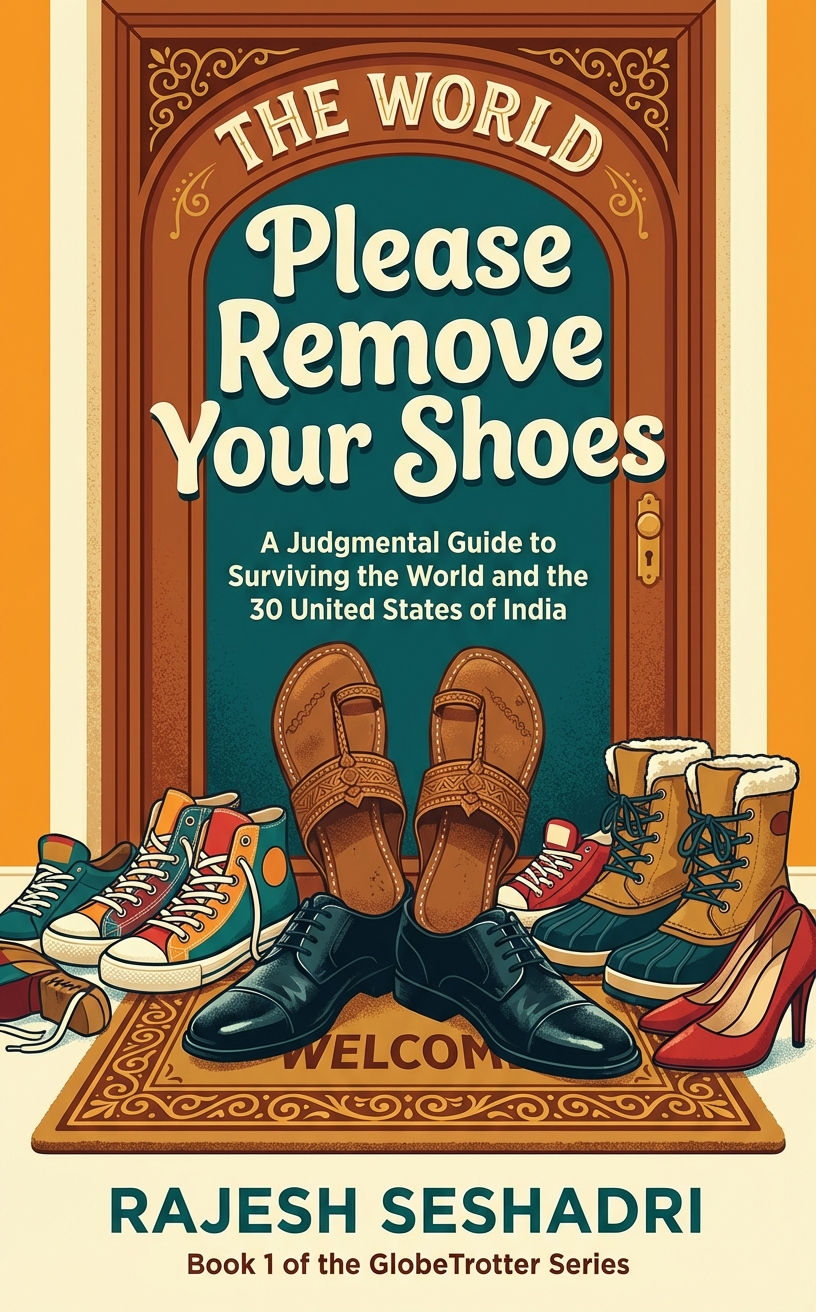
If you’ve followed my journey in the first book of The GlobeTrotter Series, Please Remove Your Shoes, you already know that I’ve spent thirty years trying to keep my feet out of trouble in global boardrooms. But as I’ve traveled from the high-tech labs of Munich to the silent galleries of the Louvre, I’ve realized there is a much more dangerous appendage attached to the Indian body: the hand.
I am thrilled to announce that the second book in the series, "Please Don't Touch That," is officially LIVE globally on Amazon!
Touching History: Why the Tactile Curiosity of the Indian Traveler is an International Incident Waiting to Happen
You see, we Indians are a "touch-and-feel" civilization. We don’t just look at a saree; we rub the fabric between our thumb and forefinger to check the GSM. We don’t just admire a new car; we knock on the bonnet to see if the metal is "solid."
But the moment you take this tactile curiosity of the Indian traveler and unleash it on a 400-year-old Ming vase or a velvet rope in a Swiss palace, things go south faster than a Mumbai local during a monsoon.
In this book, I explore the hilarious (and occasionally horrifying) reality of our need to poke the artifacts of the world. I’ve seen C-suite executives—men who manage billion-dollar portfolios—secretly trying to see if the marble on a Renaissance statue feels like real skin. I’ve seen families in London museums trying to "test the quality" of ancient Egyptian linen.
Understanding the Tactile Curiosity of the Indian Traveler in Museums and Boardrooms
The world has rules. "Do Not Touch" is the most common sign in any language. But for us, it’s not a command—it's a suggestion. It’s a challenge to our "Jugaad" spirit. We think, "Arre, if I just use one finger, how will the Pharaoh know?"
This book is the "Main Course" of my travel trilogy. Here’s what’s on the menu:
The Velvet Rope Struggle: Why we feel the need to cross the line, literally and figuratively.
The "Quality Check" Obsession: How our shopping instincts follow us into historic cathedrals and high-tech factories.
Cultural Personal Space: Why "arm’s length" is a foreign concept when you’re used to the warmth (and elbow-shoving) of a Delhi metro.
We are halfway through The GlobeTrotter Series. If you’ve already mastered the shoe etiquette from Book 1, now is the time to learn what to do with your hands. And don't get too comfortable, because the grand finale—The Ghaas-Phus Globetrotter—is coming next to help you survive the "Meat-ocalypse" and find a decent Sambar in the middle of a desert.
Look, travel isn't just about the photos you post on Instagram. It’s about not getting yelled at by a museum guard with a very large hat and an even larger ego.
So, do me a favor. Put down that expensive vase you’re currently "testing" and click the link below. Grab your copy of "Please Don't Touch That" and let’s laugh at the beautiful, tactile chaos of being an Indian abroad.
Now, if you’ll excuse me, my autowallah is honking and I’m pretty sure he’s currently touching the "Do Not Lean" sign on my gate. Some things never change, yaaro.
Vanakkan. See you on the best-seller charts!


Comments