


Why Carbon Taxes Alone Won't Save the Planet (But A Shift In Consciousness Will)

We live in an amusing era. Today, millions of people genuinely believe they are helping to save the planet by sharing a beautifully edited, 15-second aesthetic reel on social media, all while happily sipping an iced latte from a single-use plastic cup. Every morning, our family WhatsApp groups are flooded with forwarded messages about “saving Mother Earth,” sent by people who will later drive their massive SUVs just to buy groceries two streets away.
We love the idea of being eco-friendly, especially when it is convenient and looks good on Instagram. But when the applause fades, we look towards the government and boldly declare, “They should fix this!”
We cheer for new carbon taxes, bans on plastic straws, and endless climate summits where world leaders fly in on private jets to discuss reducing carbon footprints. But here is the uncomfortable truth: if humanity merely relies on government regulations and carbon taxes to handle the climate crisis, we will fail miserably.
Here is why.
The Problem With Treating the Symptoms
Do not get me wrong; policies are necessary. According to the World Bank's Carbon Pricing Dashboard, implementing a tax on carbon emissions forces major corporations to rethink how much pollution they dump into the air.
However, carbon taxes and strict regulations are just Band-Aids. They deal only with the symptoms of a much deeper disease. A tax fundamentally tells a corporation: "You can continue to destroy the earth, as long as you pay the penalty fee." It turns the destruction of our environment into simply another business expense.
When you govern through fear, fines, and penalties, people and corporations will always look for loopholes. They will easily hire brilliant lawyers and accountants to bend the rules. You cannot fine human greed out of existence.
From Extraction to Reverence: The Real Way to Save the Planet
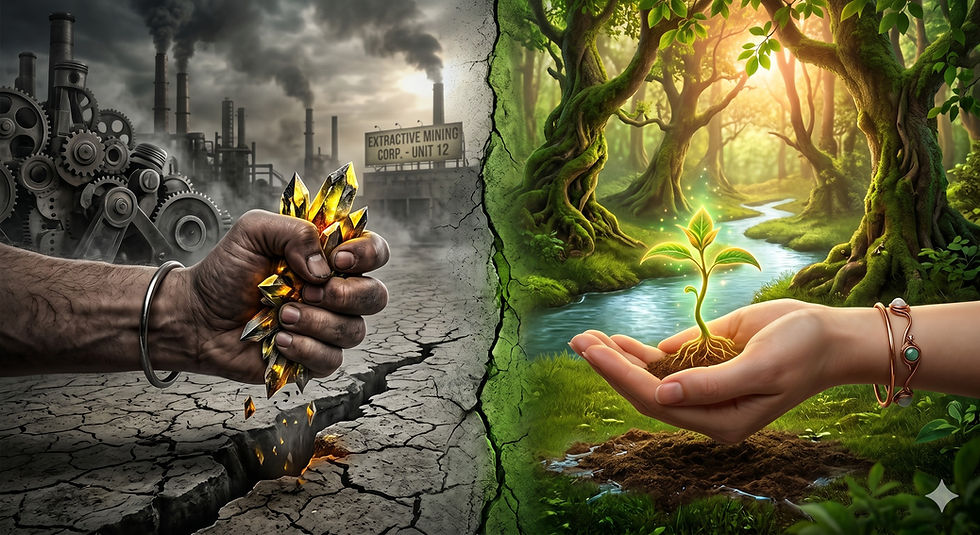
The root cause of our environmental crisis is not just carbon emissions; it is our mindset. For the last few centuries, human beings have viewed the Earth as nothing more than a giant factory. We see a forest, and our minds calculate the value of timber. We see a majestic river, and we calculate how many megawatts of electricity it can generate.
This is the mindset of extraction. We believe the Earth belongs to us, and we are entitled to squeeze every drop of life out of it for our comfort.
The only permanent way to save the planet is a global shift in our consciousness. We must move away from the mindset of extraction and return to a mindset of reverence.
Think back to our ancient roots. In India, and indeed in Indigenous cultures globally, nature was never just a "resource." It was divine. We worshipped the rivers, bowed down to the sun, and considered certain trees and forests as life-giving deities. The UN Environment Programme frequently highlights how these ancient indigenous belief systems are actually the most effective ways to conserve biodiversity.
Why did our ancestors do this? Because they understood a very simple, profound psychological truth: We do not destroy what we consider sacred.
The Ultimate Shift
If you see a mountain as just a pile of rocks containing minerals, you will happily bomb it, mine it, and leave it hollow. But if you see that same mountain as sacred, you will walk upon it with respect, taking only what you absolutely need, and leaving the rest untouched.
Government rules can force you to use a paper bag, but only a shift in consciousness will make you question why you need to buy so many things in the first place. You do not treat your home like a garbage dump, because your home is your sanctuary. The moment we start viewing the Earth as our ultimate sanctuary—our sacred home—our behaviour will automatically change. No taxes required. No viral social media campaigns needed.
Saving the planet is not an economic or political engineering problem. It is a spiritual awakening. Until we change how we look at the Earth, no amount of fines, taxes, or trending hashtags will prevent the inevitable.
Free updates on WhatsApp (you dont need to share your number)


Comments